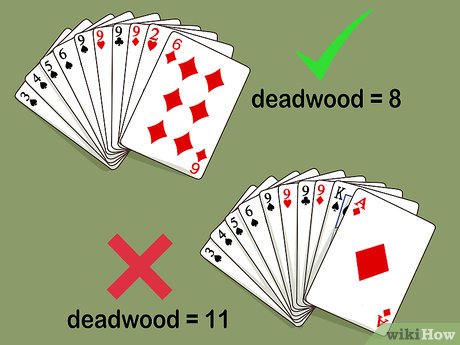
Gin rummy feels calm on the surface. Two players, one deck, a single discard pile. Then you realize the whole game is a quiet contest of timing: when to build, when to hide, and when to stop the hand before your opponent catches up. That tension is exactly why it’s still one of the best 2 player card games—it turns small choices into real swings without needing a full table.
If you’ve asked “how Gin Rummy works,” the answer is simple: you form melds to reduce your ungrouped points (deadwood), then end the hand at the right moment to score more than your opponent.
The goal: melds good, deadwood bad
A meld is either:
-
a set (three or four cards of the same rank, like 7♠ 7♦ 7♥), or
-
a run (three or more consecutive cards in the same suit, like 4♣ 5♣ 6♣)
Cards that aren’t in melds are deadwood.
Deadwood points are:
-
Ace = 1
-
2–10 = face value
-
J, Q, K = 10
You’re not trying to “win the hand” by taking tricks. You’re trying to end the hand with fewer deadwood points than your opponent—ideally zero.
Setup: deal, stock, discard
Gin rummy uses a standard 52-card deck.
-
Each player is dealt 10 cards.
-
The remaining cards form the stock (draw pile).
-
One card is turned face-up to start the discard pile.
Most games play several hands until someone reaches a target score (often 100), but the target can be whatever your group agrees.
Each turn: draw one, discard one
Every turn follows the same rhythm:
-
Draw a card
-
either from the top of the stock (unknown), or
-
from the top of the discard pile (known)
-
-
Discard one card face-up onto the discard pile
That’s it. No tricks, no skipping. The whole game lives in those two actions.
The real decision: stock vs discard
-
Taking from the discard speeds up your melds, but it also reveals information. You’re telling your opponent, “This card fits my plan.”
-
Drawing from the stock keeps your plan hidden, but you might draw junk.
A beginner-friendly guideline: take the discard only when it clearly helps you complete a meld or creates a strong near-meld you’re willing to commit to.
Ending a hand: knock, gin, or get undercut
A hand ends when one player chooses to stop the round and compare hands.
Knocking
You can knock when your deadwood is low enough (commonly 10 points or less, depending on the house rule). Knocking says: “I think I’m ahead enough to score now.”
After you knock, both players reveal their melds.
Laying off
The non-knocking player may be allowed to lay off deadwood cards onto the knocker’s melds (for example, adding a 7♦ to a 7♠ 7♥ 7♣ set). This can reduce the non-knocker’s deadwood and change the result.
Gin
If you have zero deadwood, you go gin. That usually earns a bonus because you ended the hand perfectly: all 10 cards are in melds.
Undercut
Here’s the trap that keeps gin rummy honest: if you knock but your opponent ends up with equal or lower deadwood (after layoff rules), your opponent undercuts you and gets the points (often with a bonus). Knocking too early can backfire.
Scoring: how points are usually counted
Different groups use slightly different scoring bonuses, but the core idea is consistent:
-
Winner scores the difference between deadwood totals
-
Gin earns an extra bonus
-
Undercut gives the non-knocker a bonus and flips the result
You don’t need to memorize every scoring table to enjoy the game. But you should respect undercut and understand that “barely good enough” isn’t always safe.
What makes gin rummy strategic (without overcomplicating it)
Gin rummy strategy isn’t about fancy moves. It’s about information and shape.
Shape: build hands that can become melds
Hands with flexible connections (like 6-7-8 mixed suits, or multiple pairs) tend to improve more easily. Hands with isolated high cards are often deadwood traps.
Information: the discard pile is a diary
Every face-up discard is a clue. If your opponent never takes hearts, hearts may be useless to them—or they may already be complete in another suit. Watch what they pick up more than what they throw away.
Timing: end the hand before the comeback
A lot of wins come from stopping the hand when you’re ahead, not when you’re “perfect.” But knocking too early invites undercut. The sweet spot is knocking when you’re reasonably sure your opponent can’t lay off enough to catch you.
One subtle insight beginners miss
People fixate on reducing their own deadwood and forget the other half of the game: don’t feed your opponent.
If you see your opponent pick up a 6♣, and later they avoid discarding nearby clubs, be careful about throwing 5♣ or 7♣ into the discard pile. In gin rummy, a “harmless discard” can become the exact card that completes their run.
Sometimes the best discard isn’t the highest point card—it’s the card most likely to help them.
So, how Gin rummy works is simple in rules and deep in consequences: draw, discard, build melds, manage deadwood, and choose the right moment to knock or go gin. As 2 player card games go, it’s one of the cleanest duels you can play—because every card you show, every card you hide, and every hand you end becomes part of the story.